 Try this styleon your selfie · free
Balayage vs Ombré: Which Hair Color Technique Is Right for You?
Published June 19, 2026
Two dimension-building color techniques, one big difference in placement, upkeep, and vibe — here's how to pick yours.
The Core Difference in 30 Seconds
Balayage and ombré both lighten your ends, but the how is totally different. Balayage (French for "to sweep") is a freehand painting technique — your colorist hand-paints lightener onto select strands, building soft, sun-kissed dimension throughout. There's no harsh line; it mimics how hair naturally lightens. Ombré is a gradient: dark at the roots fading to noticeably lighter ends, applied in a more horizontal, saturated band. Think of balayage as scattered highlights and ombré as a top-to-bottom fade. Balayage looks lived-in and subtle even at 6 inches of lightening; ombré makes a bolder, more graphic statement. Many salon "balayage" services today actually blend both — painted pieces up top, a stronger melt toward the ends — so don't be surprised if your stylist suggests a hybrid.
Maintenance and Cost Reality Check
Balayage is the lower-maintenance winner. Because it's painted away from the root, regrowth blends seamlessly — you can stretch appointments to every 12 to 16 weeks, and you'll rarely see an obvious line of demarcation. Expect a salon balayage to run roughly $150 to $300 depending on length and region, plus a gloss refresh every 8 weeks if you want brightness to stay crisp. Ombré can also be root-friendly since the lightening starts mid-shaft, but the saturated ends often need toning every 6 to 10 weeks to fight brassiness, especially on warm or red-leaning hair. Both techniques benefit from purple shampoo (once or twice weekly), a weekly bond-repair mask, and heat protectant. Budget for one good toning gloss between full appointments — it's the cheapest way to keep either look expensive-looking.
Which Suits Your Hair Length and Texture
Balayage shines on long and mid-length hair because painted pieces have room to travel and create movement; it's also gentle enough for fine hair since the colorist controls saturation strand by strand. Curly and wavy textures love balayage too — the painted highlights pop on every bend of the curl. Ombré needs length to read properly: on a bob or shorter, the gradient compresses and can look like a stripe rather than a fade. If you have very dark, coarse hair, ombré's saturated approach lifts ends more dramatically, which is great for high contrast. For thick hair, both work, but balayage gives a softer grow-out. Pixie cuts and short crops aren't ideal for either — there simply isn't enough canvas for a believable gradient or sweep.
Matching the Technique to Your Lifestyle
Be honest about how often you actually want to sit in a salon chair. If you travel constantly, hate touch-ups, or just want "set it and forget it" color, balayage is built for you — it forgives long gaps and grows out gracefully. If you love a dramatic, photo-ready look and don't mind a toning visit every couple of months, ombré delivers that head-turning fade. Consider your styling habits too: ombré's bright ends look incredible in beach waves and half-up styles where the gradient is on full display, while balayage rewards anyone who wears their hair down and loose. Office-conservative? Balayage reads polished and natural. Want TikTok-worthy contrast for content? Ombré (or its bolder cousin, the "dip dye") photographs with more punch.
Preview Before You Commit
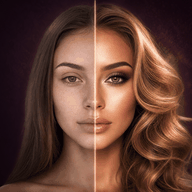
The biggest regret in color is realizing the placement doesn't flatter your face or undertone after it's already done. Before you book, get specific with reference photos and, ideally, see the technique on your own features first. You can preview both a soft painted balayage and a bolder ombré melt on your own selfie with GlowMaxing — it's a low-stakes way to compare how each falls around your jawline, how light or dark to take the ends, and which contrast level actually suits your skin before you spend three hours and $250. Bring the version you like best to your colorist as a reference. Pair it with notes on undertone (cool, warm, or neutral) and your natural base level, and your stylist can dial in the exact tone — ashy, golden, caramel, or icy — that'll keep the look intentional rather than accidental.
The Hybrid Option Everyone's Asking For
You don't have to choose. The most-requested salon look right now is a balayage-ombré blend sometimes called a "sombré" (subtle ombré) or "foilayage." It paints fine, balayage-style pieces through the mid-lengths for dimension, then deepens the lightening toward the ends like an ombré — giving you grow-out-friendly roots and a noticeable, glowy fade. Foilayage adds foils over painted sections to lift cool, dark, or stubborn hair brighter than open-air balayage can. Ask for a "shadow root" to keep regrowth invisible regardless of technique. If you're nervous about commitment, start with a soft sombré: it's the gentlest entry point, costs about the same as balayage, and you can always go brighter or more saturated at your next visit once you see how it wears on you.
The quick checklist
- Choose balayage for low upkeep and seamless grow-out (touch-ups every 12-16 weeks).
- Choose ombré for bold, photo-ready contrast and a defined top-to-bottom fade.
- Book a gloss or toner refresh every 6-10 weeks to fight brassiness on either look.
- Use purple shampoo 1-2x weekly plus a weekly bond-repair mask to protect lifted ends.
- Bring 2-3 reference photos and know your natural base level before your appointment.
- Ask for a "shadow root" so regrowth stays invisible regardless of technique.
- Try a soft "sombré" hybrid if you want dimension and a fade without full commitment.
- Skip both on very short cuts — there isn't enough length for a believable gradient.
✦ Free to start✨ Try these looks on your own selfie with GlowMaxing →Upload one selfie and try any hairstyle, color or makeup look instantly with AI. Free to start.Download on theApp Store