 Try this styleon your selfie · free
The Best Blush Colors for Pale, Medium, and Deep Skin Tones
Published October 3, 2026
Find the exact blush shades that make your complexion look lit-from-within, with picks and placement tips tailored to pale, medium, and deep skin.
Why the Right Blush Shade Changes Everything
Blush is the fastest way to look healthy, awake, and naturally flushed, but the wrong shade can age you or look muddy against your skin. The secret is matching blush to both your depth and your undertone. Depth is how light or deep your skin is; undertone is the cool, warm, or neutral hue beneath the surface. Cool undertones flatter blue-pink and berry shades, warm undertones glow in peach, coral, and golden tones, and neutral skin can wear both. A quick test: look at the veins on your wrist; bluish-purple suggests cool, greenish suggests warm, and a mix means neutral. Once you know your depth and undertone, choosing blush stops being guesswork. The aim is color that looks like it's coming from within your skin, not sitting on top, so it reads as a genuine flush rather than a swipe of powder.
Best Blush Shades for Pale Skin
Fair complexions need soft, cool-leaning shades applied with a light hand, because pigment shows up strongly and can quickly look clownish. Cool fair skin glows in soft baby pinks, rosy mauves, and gentle berry tones, while warm fair skin suits light peaches and apricots. Avoid anything too deep, brick, or brown, as those read harsh and can look like a bruise on pale skin. The trick is to build in whisper-thin layers; tap most of the product off your brush before it touches your face. Sheer, buildable cream blushes are especially forgiving on fair skin because they melt in rather than sitting heavy. A light dusting high on the cheeks gives that fresh, just-came-in-from-the-cold flush that pale skin wears so beautifully without ever tipping into overdone territory.
Best Blush Shades for Medium Skin
Medium and olive complexions are wonderfully versatile and can carry richer, warmer pigments that would overwhelm fair skin. Warm medium tones come alive in coral, peach, terracotta, and warm rose, which complement golden undertones and add dimension. Cooler medium skin looks gorgeous in true rose, raspberry, and warm mauve. Olive skin in particular benefits from a touch of warmth, so brick and warm-coral shades stop it looking grey or flat. You have more room to build intensity here, but still apply in layers for control. Medium skin also handles a slightly more saturated payoff, so don't be afraid of a blush with real color, as a too-pale shade can disappear and leave you looking washed out. The goal is a warm, lived-in flush that adds depth and life to the cheek.
Best Blush Shades for Deep Skin
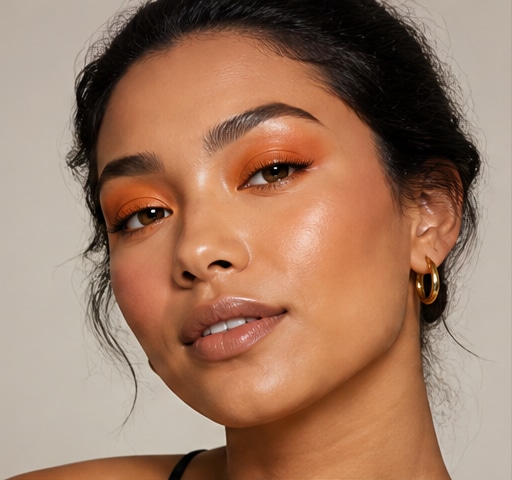
Deep complexions deserve rich, vibrant, highly pigmented blushes, and the biggest mistake is choosing shades that are too soft or muted, which simply vanish. Go bold: deep berry, brick red, rich plum, bright orange, fuchsia, and warm bronze all light up deep skin beautifully. Warm deep tones glow in tangerine and copper, while cooler deep skin stuns in magenta, raspberry, and deep berry. Pigment intensity is your friend, so look for richly saturated formulas; a sheer, chalky blush will barely register. Cream and liquid blushes often show up more true and luminous on deep skin than powders. Apply with confidence high on the cheekbone, blending up toward the temple for a sculpted lift. The payoff is a radiant, dimensional flush, so embrace color rather than reaching for the muted nudes that work on lighter skin.
Placement and Texture Matter as Much as Color
Even the perfect shade falls flat with poor placement. For a youthful, lifted look, smile and apply blush to the apples of the cheeks, then blend up and out toward the temples; this draws the face upward. Placing blush too low or too close to the nose can drag features down. Texture matters too: cream and liquid blushes give a dewy, skin-like finish ideal for dry or mature skin, while powders suit oily skin and last longer. Layer cream first then a touch of powder on top for serious staying power. If you're unsure which shade or finish actually flatters your face, you can preview different blush colors on your own selfie with GlowMaxing and compare them instantly before buying. The right placement and texture turn a good color into a genuinely flattering, healthy flush.
Quick Rules to Never Get It Wrong
Reduce the guesswork with a few reliable principles. First, match warmth to warmth and coolness to coolness; a warm peach on cool skin or an icy pink on deep warm skin will always look slightly off. Second, scale intensity to depth: the deeper your skin, the more pigment and saturation you need, while fair skin needs the lightest touch. Third, when in doubt, a soft rose or warm coral flatters the widest range of people. Fourth, always build gradually, because you can add more but removing excess means starting over. Finally, coordinate loosely with your lip and eye colors so the face reads cohesive rather than competing. Keep these rules in mind and you'll pick a flattering blush every time, whatever your complexion, leaving you with a natural, lit-from-within glow that looks like good genes rather than good makeup.
The quick checklist
- Match blush undertone to your skin: cool to cool, warm to warm
- Pale skin: soft pinks, mauves, light peaches applied sparingly
- Medium skin: coral, terracotta, rose, and warm mauve
- Deep skin: rich berry, brick, fuchsia, and bright orange
- Scale pigment intensity up as skin depth increases
- Apply to the apples, then blend up toward the temples
- Cream for dry skin, powder for oily, layer both for longevity
- When unsure, soft rose or warm coral flatters nearly everyone
✦ Free to start✨ Try these looks on your own selfie with GlowMaxing →Upload one selfie and try any hairstyle, color or makeup look instantly with AI. Free to start.Download on theApp Store