 Try this styleon your selfie · free
The Best Hairstyles for Diamond-Shaped Faces to Soften Cheekbones
Published August 4, 2026
Diamond faces have killer cheekbones and a narrow forehead and chin — here are the cuts that balance every angle beautifully.
What Makes a Face Diamond-Shaped
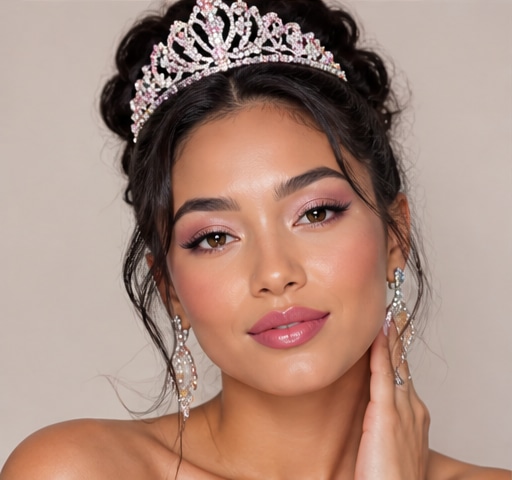
A diamond face is widest at the cheekbones, with a narrower forehead and a narrow, often pointed chin — the most angular and arguably most striking of the face shapes. The goal of styling isn't to hide those famous cheekbones but to balance them: add a little width at the forehead and jaw so the face reads more harmonious, and soften the sharp angles without flattening that gorgeous bone structure. To check if you're a diamond, look in the mirror: if your cheekbones are clearly the widest point and your forehead and chin taper in, you're likely a diamond rather than an oval or heart. Once you know the shape, almost every styling decision — length, layers, bangs, parting — follows logically from those two aims: widen the top and bottom, soften the middle.
Side-Swept and Curtain Bangs
Bangs are a diamond face's best friend because they add width and softness exactly at the narrow forehead. Curtain bangs — parted in the middle and sweeping out toward the cheekbones — are the standout choice; they widen the upper face and gently frame those cheekbones rather than emphasizing their width. Soft, side-swept bangs work similarly, adding fullness across the forehead and breaking up angularity. Avoid heavy, blunt, straight-across bangs that cut a hard horizontal line and can make the forehead look even narrower and the face more severe. Keep bangs wispy and textured so they blend into face-framing layers. The combination of curtain bangs flowing into longer layers is practically tailor-made for diamond faces and explains why it's such a recurring recommendation for this shape.
Chin-Length and Collarbone Cuts
Length and where it lands matter enormously for diamonds. Cuts that add volume around the jaw and chin are ideal because they widen the narrowest lower portion of the face and balance the cheekbones above. A chin-length bob — especially one with soft, rounded ends rather than a sharp blunt line — sits right where you want extra width. Slightly longer lobs grazing the collarbone are equally flattering and a touch more versatile. The key is having fullness and movement at the bottom, so curls, flicks, or a soft inward bend at jaw level all help. Avoid styles that pull tight and narrow at the jaw, which exaggerate the pointed chin. A wavy, chin-skimming bob with face-framing layers is a reliably stunning diamond-face cut.
Layers That Frame, Not Fight, Your Cheekbones
Layering placement is everything for a diamond face. You want long, soft layers that begin around the cheekbone or jaw and add fullness toward the bottom of the face, drawing the eye away from the mid-face width and toward a softer, more balanced overall shape. Face-framing layers that fall just past the chin gently sweep along and soften the cheekbones rather than highlighting their angularity. What to avoid: heavy, blunt layers that hit right at the cheekbones and add volume exactly where you already have width — that emphasizes the broadest point and makes the face look wider in the middle. Texture and movement are your allies; choppy, piecey layers that create softness around the lower face flatter diamonds far more than stiff, sculpted, volume-at-the-cheek styles.
Volume, Updos, and Parting Tricks
Small adjustments amplify the flattering effect. A deep side part adds width and softness at the forehead and breaks up the symmetry that can make a diamond face look stark, while a severe center part on completely sleek hair can sometimes over-emphasize the narrow forehead unless balanced with curtain bangs. For updos, leave soft tendrils down around the face and aim for fullness near the crown and jaw rather than tight, slicked styles that expose and sharpen every angle. A loose low bun or half-up with face-framing pieces is more flattering than a severe high ponytail pulled bone-tight. Side-swept volume at the temples helps fill the narrow forehead. The throughline: add softness and width at the top and bottom, keep the sides from over-hugging the cheekbones.
What to Avoid — and How to Test Before You Cut
Steer clear of three things: blunt straight-across bangs (they narrow the forehead further), heavy volume concentrated right at the cheekbones (it widens your widest point), and sleek styles pulled tight at the jaw that sharpen the pointed chin. Also be cautious with very short, cropped styles that expose the full angularity with nothing to soften it — if you go short, keep it textured and full around the jaw. Because so much depends on exactly where length and layers land, this is a face shape where previewing really pays off. Upload a selfie to GlowMaxing and try curtain bangs, a chin-length bob, and a layered lob on your own face to see which softens your cheekbones best. Then bring that reference to your stylist for precise placement.
The quick checklist
- Add width at the forehead with curtain or soft side-swept bangs
- Choose chin-length to collarbone cuts that add fullness at the jaw
- Place layers starting around the cheekbone, with volume toward the bottom
- Use a deep side part to soften and widen the narrow forehead
- Keep face-framing pieces wispy to soften, not sharpen, the cheekbones
- Avoid blunt bangs and heavy volume right at the cheekbones
- Leave tendrils loose in updos instead of slicking everything tight
✦ Free to start✨ Try these looks on your own selfie with GlowMaxing →Upload one selfie and try any hairstyle, color or makeup look instantly with AI. Free to start.Download on theApp Store