 Try this styleon your selfie · free
The Best Protective Hairstyles for Natural Hair Growth
Published July 25, 2026
Protective styles tuck away your fragile ends and lock in moisture so your natural hair can actually retain length.
What Protective Styling Actually Does
Protective styling means tucking your hair's most vulnerable parts — the ends — safely away so they're not exposed to daily friction, manipulation, weather, and breakage. The goal isn't faster growth from your scalp; that rate is largely genetic. The goal is length retention. Natural and coily hair grows at the same rate as any other, but it's more fragile and loses length to breakage when ends are constantly rubbed, combed, and dried out. By securing those ends and reducing how often you touch your hair, protective styles let the length you grow actually stay on your head instead of snapping off. The styles below all share three protective principles: they tuck the ends, minimize daily manipulation, and create a base where you can keep hair moisturized. Worn correctly and not too tight, they're the backbone of a real length-retention journey.
Braids and Box Braids
Box braids are a classic protective staple because they tuck your ends completely and last four to six weeks with minimal daily manipulation. Your natural hair is sectioned and braided down, often with added hair for length and fullness, so your own ends sit protected inside each braid. The biggest health rule is tension: braids should never be so tight that they pull at your edges or cause bumps, because traction tension is a leading cause of edge thinning. Keep them medium-sized rather than tiny if you want to reduce installation stress on your scalp. While they're in, moisturize your scalp and the exposed roots with a light oil and water mix a few times a week, and sleep in a satin bonnet. Take them down by the six-week mark — leaving braids in too long causes matting and breakage at takedown.
Twists and Two-Strand Styles
Twists — including two-strand twists, Senegalese twists, and Marley twists — are gentler than braids because they involve less tension and are easier to install and remove yourself. Two-strand twists on your own hair double as a styling and a stretching method: take them down after a few days and you get defined twist-out curls, or leave them in as the protective style itself. Because twists unravel more easily than braids, they suit people who want a lower-commitment, more DIY-friendly option they can refresh at home. They're also kinder for finer natural hair that tight braids might stress. Keep the ends secured — coil or twist them under so they're not loose and exposed — and moisturize regularly. Mini twists can last a few weeks; larger twists are quicker but looser. Either way, the reduced manipulation gives fragile strands the rest they need to retain length.
Buns, Updos, and Low-Manipulation Styles
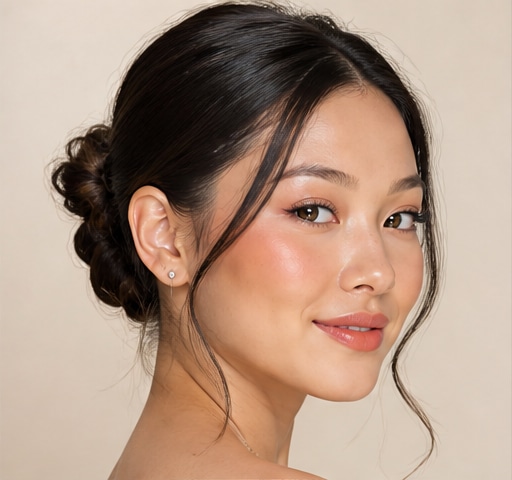
You don't need extensions to protect your hair. Simple low-manipulation styles using only your own hair are among the gentlest options. A loose bun, a flat-twisted updo, or chunky cornrows tucked into a protective shape keep your ends hidden and reduce daily handling without the weight or tension of added hair. These are ideal for people who want to give their hair a break between bigger installs, or who prefer to keep their natural texture accessible for moisturizing. The key is keeping them loose — a too-tight bun or slick-back with a hard brush and gel can stress your edges just as much as tight braids. Use a soft fabric tie, smooth edges with a gentle gel rather than aggressive brushing, and reposition the bun's placement regularly so you're not stressing the same spot every day.
Wigs and Headwraps
Wigs are arguably the most protective option because, worn correctly, they require zero manipulation of your actual hair — it stays braided down and tucked away while the wig takes all the styling, heat, and daily handling. The critical detail is what's underneath: cornrow your hair flat, moisturize it well, and protect your edges from the wig cap and any adhesives, which can cause tension and thinning if used carelessly. A satin or silk wig cap protects against friction. Headwraps and satin scarves serve the same purpose for shorter stretches, shielding hair from sun and wind while keeping moisture in. Both let you change your look daily without touching your natural strands, and both make it easy to access your hair for washing and deep conditioning on a schedule. For maximum health, give your scalp breathing time between wig wears.
Keep It Healthy Underneath
A protective style only protects if your hair stays healthy beneath it — neglected hair under a style still breaks. Before installing, start with clean, deep-conditioned, detangled, and moisturized hair so it's strong going in. While the style is in, maintain a moisture routine: mist with water and a leave-in or oil mix several times a week to keep strands and scalp hydrated, and keep your scalp clean with a diluted cleanser or scalp drops to prevent buildup and itching. Always sleep with a satin bonnet or on a satin pillowcase to reduce friction. Don't leave any style in past six to eight weeks, and give your hair a rest week between styles to wash, condition, and assess its health. Before booking an install, preview the style and length on your selfie with GlowMaxing to choose a look you'll love wearing for weeks.
The quick checklist
- Aim for length retention, not magic growth — protect your fragile ends
- Never let braids or buns be so tight they pull at your edges
- Moisturize scalp and roots with a water-and-oil mix several times a week
- Sleep in a satin bonnet or on a satin pillowcase every night
- Start every style on clean, deep-conditioned, detangled hair
- Take styles down by six to eight weeks to avoid matting and breakage
- Give your hair a rest week between installs to wash and assess
- Cornrow flat and protect edges before wearing wigs for full protection
✦ Free to start✨ Try these looks on your own selfie with GlowMaxing →Upload one selfie and try any hairstyle, color or makeup look instantly with AI. Free to start.Download on theApp Store