
 Try this styleon your selfie · free
Bronde Hair: The Perfect Blend of Brown and Blonde
Published September 20, 2026
Not quite brown, not quite blonde — bronde is the low-maintenance, universally flattering middle ground that flatters nearly everyone.
What Bronde Actually Is
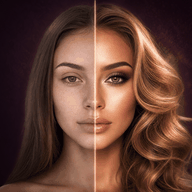
Bronde is exactly what the portmanteau suggests — a blend of brown and blonde that lives in the in-between, typically landing around a light-to-medium brown woven with blonde dimension. It's not a flat single shade but a multi-tonal mix: think a brunette base lifted with blonde highlights and lowlights so the overall impression reads as a rich, dimensional medium hue that's lighter than brown but deeper than blonde. The appeal is that it captures the warmth and depth of brunette while borrowing the brightness and movement of blonde. Because it's built from multiple tones rather than one, bronde has a natural, lived-in quality — it looks like hair that's been gently kissed by the sun rather than uniformly dyed, which is a big part of why it's stayed in demand season after season.
Why Everyone Looks Good in It
Bronde's near-universal flattery comes from its flexibility. Because it spans a range of tones, it can be customized warm or cool, lighter or deeper, to suit any complexion — and the blend of brown and blonde means there's always a tone in the mix that complements your skin. Warm brondes with honey and caramel suit warm, olive, and tan skin; cooler brondes with ashy or beige blonde flatter cool and neutral undertones; and the medium overall depth is gentle on the face rather than washing anyone out the way very pale blonde can or overwhelming the way very dark brown sometimes does. It also bridges seasons effortlessly — bright enough for summer, rich enough for winter. That adaptability is why colorists reach for bronde when a client wants something flattering, current, and not too high-maintenance.
Bronde vs. Other In-Between Shades
Bronde gets confused with a few neighbors, so it's worth drawing lines. Sun-kissed blonde leans lighter overall, with blonde as the dominant impression. Sandy or dark blonde is a single-tone shade rather than a deliberate brown-blonde blend. Bronde sits squarely in the middle, with brown and blonde roughly balanced and lots of dimension between them. It's also distinct from a flat light brown because of that woven-in blonde brightness. The practical takeaway: when you talk to your colorist, describe whether you want bronde to lean more brown (richer, lower maintenance) or more blonde (brighter, slightly more upkeep), because the term covers a spectrum and your version should be tuned to your starting color and how much lightening you're up for.
How It's Created
Bronde is usually built with a combination of highlights and lowlights over your natural or base brown, blended for dimension. If you're a brunette, your colorist paints or foils blonde pieces throughout — often concentrated around the face and ends — to lift the brightness, sometimes adding lowlights to keep depth and richness. If you're currently blonde, the move is the reverse: adding lowlights and a deeper root to bring warmth and dimension down into a bronde. Balayage is a popular technique here because its soft, blended placement gives that natural, grown-out look bronde is known for. A toner or gloss at the end unifies the tones and dials in whether the result reads warm or cool. The multi-step blending is what separates expensive-looking bronde from flat box color.
Choosing Your Bronde
The right bronde for you comes down to two dials: warmth and depth. For warmth, warm-toned brondes (honey, caramel, golden) flatter warm and olive skin and feel sunny, while cooler brondes (ash, beige, mushroom) suit cool and neutral undertones and feel more muted and modern. For depth, a brown-leaning bronde is richer and lower maintenance with softer grow-out, while a blonde-leaning bronde is brighter but asks for a bit more upkeep. Eye color and wardrobe can guide you too, but skin undertone is the biggest factor. Because bronde spans such a range, seeing it on yourself removes the guesswork. Snap a selfie and preview a warm honey bronde against a cool ashy one with GlowMaxing — the right one usually becomes obvious the moment you see it on your own face.
Living With Bronde
One of bronde's best selling points is how forgiving it is to maintain. Because it's dimensional and sits close to most people's natural depth, grow-out is soft and gradual rather than a stark line, so you can comfortably go two to three months between appointments. A gloss or toner refresh every several weeks keeps the tone fresh and the shine high without a full color service. Use color-safe, hydrating products and deep-condition regularly to keep the blonde pieces healthy, and reach for purple shampoo only if your cooler blonde dimension starts going brassy. Heat protectant and limited sun exposure help the tone stay true. All told, bronde delivers a lot of dimension and flattery for relatively little upkeep, which is exactly why it's a long-running favorite.
The quick checklist
- Bronde balances brown and blonde with woven-in dimension, not one flat tone
- Tell your colorist whether you want it to lean more brown or more blonde
- Pick warm honey-caramel for warm/olive skin, cool ash-beige for cool/neutral
- Built with highlights and lowlights, often via balayage for a natural blend
- Grow-out is soft, so you can wait 2-3 months between appointments
- Refresh with a gloss every few weeks to keep tone and shine
- Deep-condition and use color-safe products to protect the blonde pieces
✦ Free to start✨ Try these looks on your own selfie with GlowMaxing →Upload one selfie and try any hairstyle, color or makeup look instantly with AI. Free to start.Download on theApp Store