
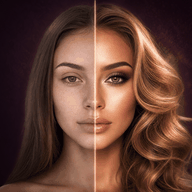
 Try this styleon your selfie · free
Color Theory for Your Glow Up: Matching Hair to Skin Tone
Published September 13, 2026
The right hair color makes your whole face light up — here's the color theory to get it right the first time.
Undertone Is Everything
Before you pick any hair color, you need to know your skin's undertone, because that — not how light or dark your skin is — determines which shades flatter you. Undertones fall into three families: warm (golden, peachy, yellow), cool (pink, red, bluish), and neutral (a balance of both). A few quick home tests help. Check your wrist veins: greenish suggests warm, bluish or purple suggests cool, a mix suggests neutral. Notice which jewelry flatters you — gold tends to suit warm, silver suits cool. Think about how your skin reacts to sun: easy tanning leans warm, easy burning leans cool. None of these is perfect alone, so use them together for a confident read. Once you know your undertone, hair color stops being guesswork and becomes a system that consistently makes your complexion look brighter, more even, and alive.
Matching Warm Hair to Warm Skin
If you have warm undertones, hair colors with golden, copper, caramel, and honey notes will harmonize with your skin and make it glow. Think golden blonde, warm honey browns, rich chocolate with warm reflects, auburn, and copper reds — these echo the warmth in your complexion and create a cohesive, healthy look. The classic warm-skin mistake is choosing a very ashy or cool shade, like platinum or ash blonde, which can clash with golden skin and leave it looking sallow or washed out. That doesn't mean warm-toned people can never go lighter; it means choosing warmer versions of light shades, like a golden or beige blonde rather than an icy one. The test is always the same: hold the color near your face and watch whether your skin looks more radiant and even or more dull and tired.
Matching Cool Hair to Cool Skin
Cool undertones come alive next to hair shades with ashy, neutral, or cool reflects. Ash blonde, platinum, cool or beige browns, espresso, jet black, and cool-toned reds like burgundy and cherry flatter cool complexions beautifully, complementing the pink or bluish notes in the skin. The common cool-skin pitfall is going too warm — a brassy golden or heavy copper can fight cool skin and make it look ruddy or uneven. If you have cool, fair skin, high-contrast options like a deep cool brown or true black can look striking, while cool blondes give a fresh, modern effect. As always, lightness is separate from undertone: a cool-toned person can wear blonde or black, as long as the version of that color leans cool rather than golden. Match the temperature of the color to the temperature of your skin and it reads effortless.
Contrast Level and Eye Color
Undertone is the foundation, but two more factors refine the choice. First, contrast: this is the gap between your skin and hair depth. Naturally high-contrast people (fair skin, dark hair) tend to carry bold, deep colors well, while lower-contrast people often look most harmonious in shades closer to their natural depth — going dramatically dark on very fair, soft features can look severe. Second, eye color can guide flattering accents; warm hair tones often make brown and hazel eyes pop, while cool tones can intensify blue and grey eyes. You don't have to obey these rigidly — they're tools for refinement, not rules. The goal is a combination where your features look balanced and your eyes stand out, rather than a hair color so dominant it overwhelms the face it's meant to frame. Consider the whole picture, not just the swatch.
Testing Before You Commit
Hair color is one of the highest-stakes glow-up moves — it's expensive, semi-permanent, and a wrong choice can take months and a lot of toning to fix. So test before you commit. Gather inspiration photos of people with similar undertones and contrast to yours rather than just a shade you like in isolation. Consider going a shade or two from your natural color first, since dramatic changes are harder to reverse and harder to maintain. And before you book anything, previewing the color on your own selfie in GlowMaxing lets you see how a shade actually reads against your specific skin and features instead of imagining it. When you do go to a colorist, bring clear references and ask whether the tone suits your undertone. A little color theory and a preview up front saves you from the expensive lesson of a shade that fought your face.
The quick checklist
- Identify your undertone with vein, jewelry, and sun tests
- Warm skin glows with golden, honey, caramel, and copper shades
- Cool skin suits ash, platinum, espresso, and cool reds
- Match the color's temperature to your skin's, not just its lightness
- Consider your natural contrast level before going very dark or light
- Gather references from people with similar undertones
- Preview the color on your selfie before booking a colorist
✦ Free to start✨ Try these looks on your own selfie with GlowMaxing →Upload one selfie and try any hairstyle, color or makeup look instantly with AI. Free to start.Download on theApp Store