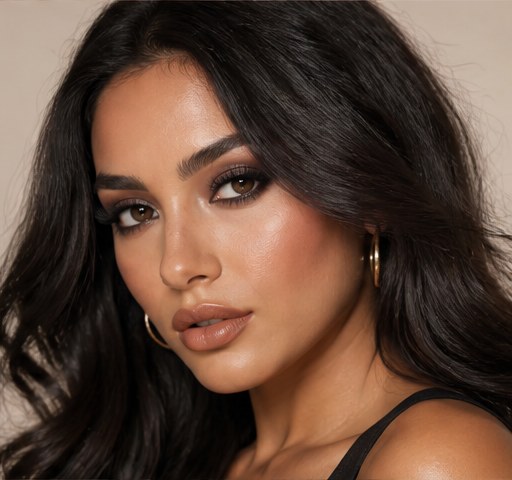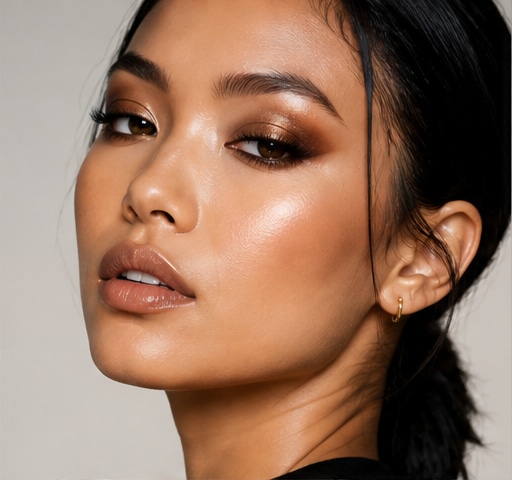
 Try this styleon your selfie · free
The Complete Eyeshadow Guide: Placement, Blending & Looks
Published May 1, 2026
From the basic crease to cut-creases and halo eyes — understand the map of the lid and never fear a palette again.
Why eyeshadow feels confusing
Most people own a palette but use one shade across the lid and call it a day, because eyeshadow placement is rarely explained clearly. Once you understand the simple map of the eye — lid, crease, outer corner, brow bone and lower lash line — every tutorial suddenly makes sense and you can recreate almost any look with confidence.
The map of the eye
The lid is the moving part below the crease, where you place your main colour. The crease is the socket line, where a slightly darker shade adds depth. The outer corner takes the darkest shade to add dimension. The brow bone gets a light or shimmer shade to lift, and the lower lash line mirrors the eye to tie it together. That is the whole system.
Building a basic eye
Start with primer so colour grips and lasts. Sweep a neutral transition shade through the crease with a fluffy brush — this is the secret to seamless blending. Pat your main colour onto the lid with a flat brush, deepen the outer corner, then blend, blend, blend in windshield-wiper motions. Add a shimmer to the centre of the lid to make eyes pop, and smoke a little shade under the lower lash line.
Blending like a pro
Blending is ninety percent of a good eye look. Use a clean fluffy brush to soften every hard edge, work in thin layers rather than one heavy deposit, and keep your transition shade handy to buff out any harshness. Tap excess off your brush before applying so you build colour gradually. Patience here is what separates muddy from professional.
Five looks to master
A soft wash is one shade blended over the lid for everyday. A smokey eye deepens the outer corner and lower lash line for drama. A cut crease carves a sharp line for a graphic, deep-set effect. A halo eye places shimmer in the centre with darker shades on the inner and outer corners. A colour pop swaps the neutral lid for a vivid shade. Each uses the same map.
Choosing colours that flatter
Certain shades make eye colours pop: warm browns, coppers and bronzes flatter blue eyes; purples and plums bring out green; gold and warm neutrals enhance brown. But the most flattering choice is one that suits your skin and the occasion. When in doubt, neutrals are universally wearable and the easiest to blend.
Make it last
Eyeshadow fades, creases and smudges without the right base. Always prime, set your concealer underneath, and tap a translucent powder under the eye to catch fallout. For oily lids, a cream base under powder shadow locks it down. Finish a full eye before doing your base if you are prone to fallout, then clean up underneath.
The quick checklist
- Always start with an eye primer
- Use a transition shade in the crease first
- Build colour in thin layers and blend each one
- Add shimmer to the lid centre to make eyes pop
- Mirror the look on the lower lash line
- Set with powder to stop creasing and fallout
✦ Free to start✨ Try these looks on your own selfie with GlowMaxing →Upload one selfie and try any hairstyle, color or makeup look instantly with AI. Free to start.Download on theApp Store