Published March 15, 2026
Learn your undertone and which makeup shades make your skin look healthy instead of washed out.
Find Your Undertone First
Before choosing shades, you need to know whether your skin leans cool, warm or neutral, which is separate from how light or deep it is. Check the veins on your inner wrist: bluish-purple suggests cool, greenish suggests warm, and a mix points to neutral. Notice whether silver or gold jewelry flatters you more, silver suits cool, gold suits warm, and whether you tan easily, which often indicates warmth. Most people lean one direction, and knowing yours instantly clarifies which makeup shades will make you glow.
Match Foundation to Undertone
The fastest way to look healthy or sallow is the undertone of your base. Cool skin needs foundations with pink or rosy undertones, while warm skin needs yellow or golden ones; neutral skin can wear either as long as it's balanced. A foundation that's the right depth but the wrong undertone reads ashy on cool skin or orange on warm skin. Always test on the jaw in natural light and look for the shade that seems to disappear into your neck.
Choose Blush and Bronzer by Temperature
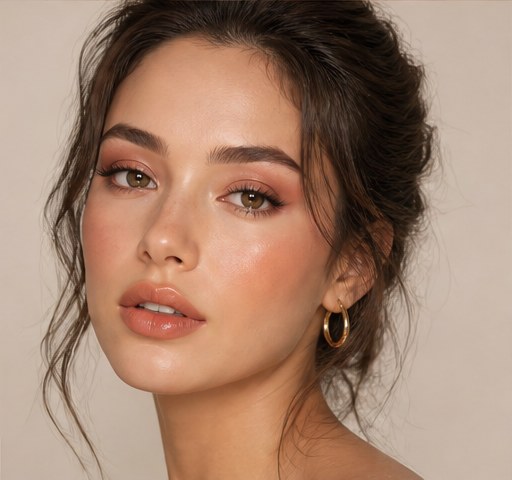
Cheek products are where temperature really shows. Cool undertones glow in rosy pinks, berry, plum and cool mauve, paired with taupe-leaning bronzers and contours. Warm undertones come alive in peach, coral, warm rose and terracotta, paired with golden or warm-brown bronzers. Using a warm coral on cool skin can look feverish, while a cool berry on warm skin can read dull, so matching temperature keeps the flush believable.
Pick Eyeshadows That Make Eyes Pop
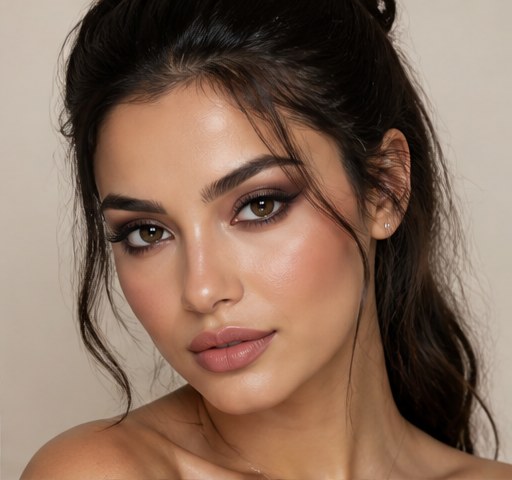
Eye colors follow the same logic, and the right temperature makes eyes look brighter. Cool tones, such as taupe, mauve, plum, silver and cool grays, flatter cool skin, while warm tones, such as bronze, copper, gold, terracotta and warm browns, suit warm skin. You can also use temperature to make eye color pop by leaning into complementary shades. Neutrals like soft beige and true brown work on nearly everyone, which is why they're such reliable everyday choices.
Get Your Lip Shade Right
Lip color is one of the easiest places to see undertone in action. Cool skin shines in blue-based reds, berries, true pinks and cool nudes, while warm skin glows in orange-reds, corals, brick and warm peachy nudes. A blue-red on warm skin can look stark, and an orange-red on cool skin can look muddy. When in doubt, a my-lips-but-better nude matched to your temperature is the most universally flattering choice.
Know When to Break the Rules
Undertone guidelines are a powerful starting point, not a cage, and neutral skin especially has freedom to roam. You can wear an off-temperature shade successfully by adjusting intensity, sheering out a too-warm coral or softening a too-cool berry so it harmonizes. Context matters too: lighting, outfit and the rest of your makeup all shift how a shade reads. Use temperature as your default, then experiment knowingly once you understand why certain shades flatter you.
Test Cool vs Warm on Your Own Face
Reading about undertones is helpful, but seeing the difference on yourself is what makes it click. Use GlowMaxing to preview cool-toned and warm-toned looks side by side on your selfie so you can watch how each makes your skin look brighter or duller. Comparing a cool mauve against a warm peach on your own face removes the guesswork from buying products. Once you've seen which temperature lights you up, every future shade decision gets easier.
The quick checklist
- Check veins, jewelry and tanning to find your undertone
- Match foundation undertone, not just depth
- Pick rosy or peachy blush to match your temperature
- Choose eyeshadows in your warm or cool family
- Match lip shades to undertone for a believable look
- Adjust intensity to wear off-temperature shades safely
 ✦ Free to start✨ Try these looks on your own selfie with GlowMaxing →Upload one selfie and try any hairstyle, color or makeup look instantly with AI. Free to start.Download on theApp Store