 Try this styleon your selfie · free
Cool vs Warm Hair Colors: A Complete Beginner's Guide
Published June 21, 2026
Learn to read the temperature of any hair color so you can finally describe exactly what you want at the salon.
What "Temperature" Actually Means
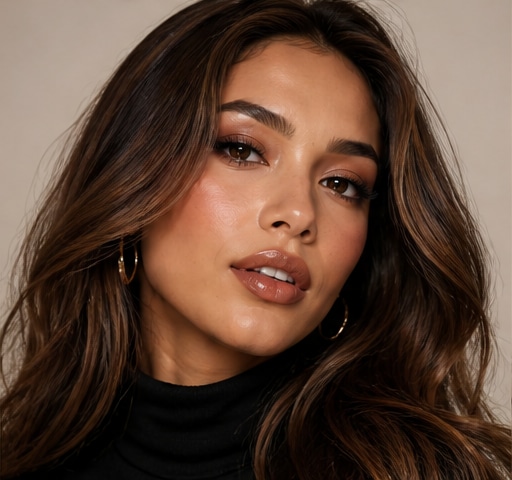
Every hair color has a temperature — a warm, cool, or neutral undertone — regardless of how light or dark it is. Warm tones contain red, orange, gold, or yellow reflects: think honey blonde, copper, caramel, golden brown, and auburn. Cool tones contain blue, violet, green, or ash reflects: think platinum, ash blonde, espresso, blue-black, and burgundy. Neutral sits in between with no dominant pull. Temperature is separate from level (lightness). You can have a level-7 warm blonde and a level-7 cool blonde that are equally light but look completely different — one golden, one icy. Colorists describe shades with both a number (level 1 darkest to 10 lightest) and a tone. Learning to separate these two ideas is the single most useful skill for getting the color you actually pictured.
How to Spot Warm vs Cool in the Wild
Train your eye with a simple comparison habit. Put two photos side by side and ask: does this color remind me of gold, honey, rust, and sunlight (warm) or of ash, smoke, ice, and frost (cool)? Warm blondes look buttery or golden; cool blondes look beige, sandy, or platinum-icy. Warm browns glow with red or caramel; cool browns look like coffee, mushroom, or have a gray-ash haze. Warm reds are copper and ginger; cool reds are cherry, wine, and violet-burgundy. Black can be warm (soft, brown-black) or cool (blue-black). A quick trick on Pinterest: if a swatch makes you think "cozy, autumn, sun-kissed," it's warm; if it makes you think "sleek, expensive, frosty," it's cool. Save examples of each so you can show a stylist precisely.
Why Temperature Matters for Your Face
The whole point of understanding temperature is harmony with your skin. As a rule, cool skin undertones (pink, red, or blue beneath the surface) are flattered by cool hair colors, and warm undertones (yellow, gold, peach) by warm ones. Get it right and your skin looks clear and luminous; get it wrong and the same face can look sallow, ruddy, or tired. There are exceptions — a touch of contrasting warmth around the face can brighten cool tones, and that's why babylights and face-framing pieces exist — but the base shade should generally agree with your undertone. If you're not sure of yours, the silver-versus-gold jewelry test is the fastest cheat: whichever metal makes your skin look healthier points you toward that temperature family for hair.
Maintenance Differs by Temperature
Warm and cool colors fade in opposite directions, and your routine should account for it. Cool tones fade toward brassy warmth — your icy blonde turns yellow, your ash brown turns orange — because the underlying warm pigment in hair resurfaces as the cool toner washes out. Combat it with purple shampoo (for blondes) or blue shampoo (for brunettes) once or twice weekly, plus a toning gloss every 6 to 8 weeks. Warm tones fade by losing vibrancy; coppers and golds dull and lighten over time. Protect them by washing less frequently (every 2 to 3 days), using cool water, and choosing sulfate-free color-safe products. Reds of any temperature are the fastest to fade and demand the gentlest care. For all colors, heat protectant and a weekly bond or moisture mask preserve shine and slow the wash-out.
Choosing Your First Direction
If you're brand new to coloring, start by deciding your temperature family before anything else, then pick a level within it. Match your undertone, then choose how light or dark based on contrast: high contrast (fair skin, dark features) can handle bold and deep, low contrast (fair skin, light features) looks softer staying close to natural. Don't jump more than two or three levels on your first try — a dramatic swing is harder to maintain and easier to regret. Preview your top choices on your own selfie with GlowMaxing so you can see a warm caramel and a cool ash brown on your actual face before committing; it makes the warm-versus-cool decision concrete instead of theoretical. Then bring your favorite to a colorist with the level and tone written down so there's zero guesswork in the chair.
Talking to Your Colorist Like a Pro
Walk in with vocabulary and you'll walk out with the color you wanted. Use both axes: "I want a level 8, cool ash blonde, no gold," or "a level 4, warm chocolate with subtle red reflects." Specify what you want to avoid — "please no brassiness" or "nothing too ashy or gray" — since those words mean specific things to professionals. Bring two or three reference photos in good lighting and point out exactly what you like in each (the tone in one, the brightness in another). Ask about a gloss or toner to fine-tune temperature after lightening, and how often you'll need to return. Finally, ask which at-home products keep your specific tone true. Speaking in levels and tones signals you understand the process, and good colorists love a client who can describe the goal precisely.
The quick checklist
- Separate level (lightness, 1-10) from tone (warm, cool, neutral) when describing color.
- Warm = gold/copper/honey reflects; cool = ash/violet/icy reflects.
- Match cool skin undertones to cool colors and warm undertones to warm colors.
- Use the gold-vs-silver jewelry test to quickly find your undertone family.
- Cool tones fade brassy — use purple/blue shampoo; warm reds fade fastest — wash gently.
- Start within 2-3 levels of your natural color for an easy-to-maintain first change.
- Bring reference photos plus a written level and tone to your colorist.
- State what to avoid ("no brass," "not too ashy") for a precise result.
✦ Free to start✨ Try these looks on your own selfie with GlowMaxing →Upload one selfie and try any hairstyle, color or makeup look instantly with AI. Free to start.Download on theApp Store