 Try this styleon your selfie · free
Cornrows and Protective Styling Basics
Published January 27, 2026
How protective styles work, how to keep them neat, and how to look after your hair underneath.
What Protective Styling Actually Does
Protective styles tuck away the fragile ends of natural and textured hair so they are not exposed to daily friction, manipulation and weather. By keeping ends sheltered, styles like cornrows, box braids and twists help retain length and reduce breakage. They also cut down on daily styling time, which means less heat and less tension on the hair. The key word is protective, so a style that is too tight or left in too long stops protecting and starts damaging.
Understanding Cornrows
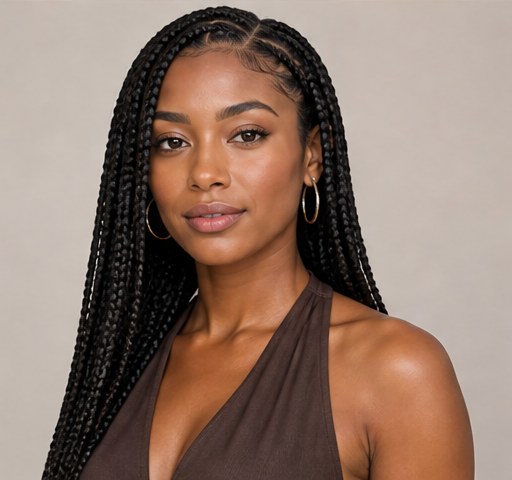
Cornrows are braids worked flat against the scalp using an underhand, add-as-you-go technique, essentially Dutch braiding directly on the head. They can be styled in straight-back rows, curves, or intricate geometric patterns. Because they sit close to the scalp, they are durable and ideal as a base for wigs or as a finished style on their own. Cornrows suit most hair types but are especially valued for textured and coily hair as a low-manipulation option.
Prepping Hair Before You Braid
Healthy protective styling starts before the first braid. Wash, deep-condition and fully moisturize the hair so it goes into the style hydrated, since you will not be able to condition as easily once braided. Detangle thoroughly and stretch the hair with a blow-dry on low or banding to make sectioning easier. A light oil or leave-in along the lengths gives slip and protects strands during the braiding process.
Avoiding Too-Tight Tension
The most common mistake with cornrows and braids is making them too tight, which causes pain, bumps and traction alopecia over time. A braid should feel secure, not painful, and you should never feel stinging at the hairline. If you see little bumps or feel a pulling headache after install, the tension is too high. Be especially gentle around the delicate edges and nape, where hair is finest and most prone to thinning.
Caring for Your Scalp Underneath
Just because hair is braided does not mean care stops. Keep the scalp clean with a diluted shampoo or a scalp-specific cleanser applied with an applicator bottle, and follow with a lightweight oil to prevent dryness and flaking. Moisturize the braids themselves with a water-based spray and seal with oil a few times a week. A clean, moisturized scalp underneath is what keeps the style looking fresh and the hair healthy.
Protecting Styles at Night
Nighttime care makes a protective style last and keeps frizz down. Wrap the hair in a satin or silk scarf or bonnet before bed, since cotton pillowcases cause friction and dryness. For longer braids, loosely gathering them up protects the ends. This simple habit dramatically extends how neat the style looks and reduces the fuzz that builds up around the hairline.
Knowing When to Take Them Out
Even the best protective style needs a deadline. Most cornrows and braids should come out within four to eight weeks, before new growth causes matting and tension at the roots. Leaving styles in too long leads to tangling, breakage and buildup that undoes the protective benefit. When you take them down, do it gently with plenty of conditioner, then give your hair a wash, deep-condition and a rest before the next install.
The quick checklist
- Deep-condition and moisturize before braiding
- Never braid so tight it stings the hairline
- Cleanse the scalp with a diluted, targeted wash
- Moisturize braids and seal with oil weekly
- Wrap hair in satin or silk every night
- Take styles out within four to eight weeks
✦ Free to start✨ Try these looks on your own selfie with GlowMaxing →Upload one selfie and try any hairstyle, color or makeup look instantly with AI. Free to start.Download on theApp Store