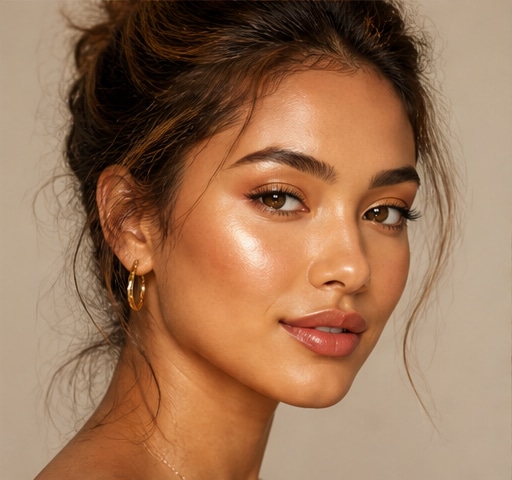
 Try this styleon your selfie · free
Covering Grays at Home: A Safe Guide
Published November 17, 2025
How to blend or cover grays at home with confidence and minimal damage.
Understand How Gray Hair Behaves
Gray strands are wirier, more resistant to color, and lack pigment, so they often grab dye unevenly. Coarse grays around the temples and hairline tend to be the most stubborn, which is why those spots fade first. Choosing a formula designed for gray coverage gives you the extra deposit those strands need. Before you commit, preview a shade close to your natural base on your selfie so you know roughly where you're heading.
Pick a Shade Close to Your Natural Base
The safest at-home rule is to stay within one to two levels of your real color. Going dramatically darker makes grays look flat and roots more obvious as they grow. Going much lighter on gray-heavy hair usually requires lift you can't get from a box dye without brass or breakage. Warm, neutral browns and soft caramel tones blend regrowth gracefully, so try a few on yourself digitally before buying.
Demi-Permanent vs Permanent: Choose Gently
If your grays are scattered (under 30 percent), a demi-permanent gloss blends them softly without a harsh line of demarcation and washes out gradually. For heavier coverage, permanent color deposits and locks pigment but commits you to root maintenance every four to six weeks. Demi formulas are lower in ammonia and gentler on the strand, making them ideal for first-timers. Many people alternate: permanent at the roots, gloss through the lengths.
Strand Test and Patch Test First
Always do a patch test 48 hours before for allergy safety, even with a brand you've used before, since sensitivities can develop over time. A strand test snipped from underneath shows true processed color and timing on your actual grays. This is the single best way to avoid a too-dark or too-brassy surprise. Note your exact timing so the full application is predictable.
Application Strategy for Even Coverage
Start where grays are most concentrated, usually the hairline, temples, and part, because those areas need the longest processing time. Section hair into four quadrants and apply root-first with a tint brush for control. Resist piling product only on top; saturate fully around each stubborn strand. Once roots are covered, pull remaining color through mid-lengths in the last few minutes if needed.
Aftercare to Keep Color True
Wait 48 to 72 hours before your first wash so the cuticle seals and pigment sets. Use sulfate-free, color-safe shampoo and cool water to slow fading, especially with red and brown tones that bleed fastest. A weekly bond or moisture mask offsets the dryness gray hair already carries. A clear or tinted gloss every few weeks refreshes shine and stretches time between full color sessions.
When to See a Professional Instead
If you're covering more than 50 percent gray, correcting a previous mistake, or attempting a big lift, a colorist is worth the visit. Resistant grays sometimes need pre-softening that's hard to replicate at home. Chemical relaxers, recent bleach, or compromised hair also call for professional judgment. There's no shame in box-color maintenance between salon appointments once your base is established.
The quick checklist
- Patch test 48 hours before every application
- Stay within two levels of your natural base
- Apply to grayest areas (temples, hairline) first
- Strand test to confirm timing and final shade
- Wait 2-3 days before the first shampoo
- Refresh with a tinted gloss between full colors
✦ Free to start✨ Try these looks on your own selfie with GlowMaxing →Upload one selfie and try any hairstyle, color or makeup look instantly with AI. Free to start.Download on theApp Store