 Try this styleon your selfie · free
How to Find Your Most Flattering Hairstyle by Face Shape
Published July 7, 2026
A practical method to identify your face shape and the cuts that balance it best.
Why Face Shape Guides the Cut
The goal of a flattering haircut is balance: most face-shape advice aims to move every face toward the proportions of an oval, which is considered the most universally balanced shape. That means adding width where a face is narrow, adding length where it is round, and softening where it is angular. Hair frames the face like a picture frame, so the right shape can highlight your best features and gently offset the rest. This is not about hiding anything; it is about working with your natural structure. Once you know your shape and the simple principles of balance, you can evaluate any trend yourself rather than guessing. The same haircut genuinely looks different on different faces, which is why your friend's perfect lob might not be yours, and that is completely normal.
How to Measure Your Face Shape
Pull your hair back, face a mirror in good light, and look at four things. Measure or eyeball the width of your forehead, the width across your cheekbones, the width of your jaw, and the length of your face from hairline to chin. An oval face is about one and a half times longer than it is wide with a slightly narrower jaw than forehead. A round face has soft angles with width and length roughly equal. A square face has a strong, angular jaw with forehead, cheeks, and jaw similar in width. A heart shape is widest at the forehead and narrows to a pointed chin. Tracing your face outline on a mirror with a dry-erase marker is a surprisingly accurate trick if you are unsure between two shapes.
Cuts for Round and Square Faces
Round faces benefit from anything that adds vertical length and definition. Long layers, styles with height at the crown, side-swept bangs, and face-framing pieces that fall below the chin all elongate. Avoid blunt chin-length bobs and very wide, voluminous styles at cheek level, which emphasize roundness. Square faces have beautiful structure that softens best with movement: layered cuts, soft waves, side parts, and wispy fringe break up the strong jawline. Length past the jaw draws the eye downward and softens angles, while a textured shag adds gentle disorder that flatters. Both shapes should generally skip ultra-blunt, geometric, one-length cuts that echo the very feature you are balancing. Curtain bangs are forgiving on both because they frame the cheekbones and add softness without committing to a heavy fringe.
Cuts for Heart and Oval Faces
Heart-shaped faces are wider at the forehead and taper to a narrow chin, so the aim is to add fullness around the jaw and avoid piling volume up top. Cuts that hit at or just below the chin, like a lob with movement, balance the proportions beautifully, and side-swept or curtain bangs soften a wider forehead. Avoid short, voluminous styles that widen the upper face. Oval faces are the lucky ones: nearly every cut works, from a sleek long style to a pixie to a blunt bob. The main caution for ovals is not to add heavy, full bangs combined with lots of volume, which can make a balanced face look longer or hide its natural symmetry. With an oval, you can chase trends freely and choose based on your hair texture and lifestyle.
Texture, Lifestyle, and Hair Type
Face shape is only half the story; your hair's natural texture and your daily reality matter just as much. A cut that requires daily heat styling will look great in the chair and disappointing every morning if you have ten minutes. Fine hair holds blunt cuts and shorter lengths better, since heavy layers can look thin, while thick or curly hair often needs internal layers to remove bulk and define shape. Curly hair shrinks when dry, so always cut it with shrinkage in mind. Tell your stylist how much time you actually spend styling, whether you blow-dry, and how often you can come in for trims. The most flattering cut is one that suits your face, works with your texture, and survives your real schedule.
Test Before You Cut
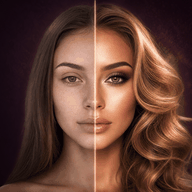
Big hair decisions are far less scary when you can see them first. Bring reference photos to your consultation, but remember those models have different face shapes, hair textures, and a stylist standing by, so the result on you will differ. A smarter step is to preview the cut on your own face before committing. You can try different hairstyles, colors, and makeup looks on your own selfie with GlowMaxing to see how a lob, bangs, or a pixie reads against your actual features and skin tone. This turns a vague idea into a confident decision and gives you a clear image to show your stylist. Combine that preview with an honest talk about upkeep, and you will walk out with a cut that flatters your shape and fits your life.
The quick checklist
- Pull hair back and measure forehead, cheekbone, jaw width, and face length
- Aim to balance your face toward oval proportions
- Round faces: add height and length, skip chin-length blunt bobs
- Square faces: soften with layers, waves, and side parts
- Heart faces: add fullness at the jaw with a chin-grazing lob
- Oval faces: almost anything works, so pick for texture and lifestyle
- Factor in your hair texture and real styling time
- Preview cuts on your own selfie before you commit
✦ Free to start✨ Try these looks on your own selfie with GlowMaxing →Upload one selfie and try any hairstyle, color or makeup look instantly with AI. Free to start.Download on theApp Store