 Try this styleon your selfie · free
How to Choose the Right Lipstick for Your Skin Tone
Published July 15, 2026
Match undertone, depth, and finish to your complexion and you'll never buy another lipstick that washes you out.
Find Your Undertone First
Before color, you need to know your undertone, the subtle hue beneath your skin's surface, because it determines which lipsticks flatter and which fight your complexion. Check the veins on your inner wrist in natural light: blue or purple veins point to a cool undertone, green veins to warm, and a mix of both to neutral. Another test is jewelry, silver tends to flatter cool skin while gold flatters warm. Cool undertones glow next to blue-based reds, berries, and pinks with a blue tint. Warm undertones come alive in orange-reds, corals, terracottas, and warm browns. Neutral skin is lucky enough to wear both. Undertone matters far more than how light or dark your skin is, so identify it once and use it as your filter for every lipstick decision going forward.
Match Depth to Your Complexion
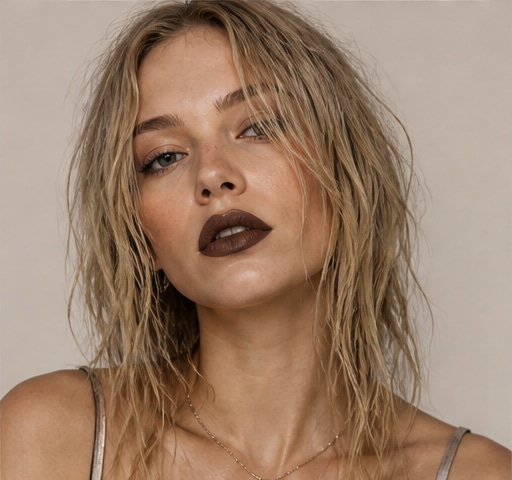
Once you know your undertone, consider depth, how light or deep the lipstick is relative to your skin. Fair skin is balanced by soft to medium shades like rosy nudes, dusty pinks, soft corals, and classic reds, while very pale or stark dark shades can look harsh. Medium and olive complexions glow in berry, brick, mauve, and warm rose tones that have enough pigment to register without overwhelming. Deep skin tones look stunning in rich, saturated colors: deep plums, brick reds, bold fuchsias, chocolate browns, and true reds with depth, while pale frosty nudes can read ashy and washed out. The general rule is to pick a shade with enough contrast or harmony to enhance, not erase, your natural coloring. A lipstick a few shades deeper than your bare lips usually reads most flattering as an everyday option.
Pick the Right Nude for You
Nude lipstick is where most people go wrong, because a nude is only flattering if its undertone and depth match your skin. The fastest way to find your nude is to look slightly deeper than your natural lip color and stay within your undertone family. Fair cool skin suits pink-toned and rosy nudes, fair warm skin suits peachy nudes, medium skin suits caramel and warm beige nudes, and deep skin suits rich brown and terracotta nudes. The mistake is reaching for a pale beige that's much lighter than your lips, which creates that washed-out, concealer-lips effect. Hold the bullet next to your lip, not your hand, since hands are often a different tone. The right nude should make you look polished and awake, like your lips but better, never grey or ghostly.
Choose Finish for Occasion and Lip Type
Finish changes everything about how a lipstick wears and reads, so match it to both the occasion and your lips. Matte finishes are long-lasting and look modern and dramatic but can emphasize dry or chapped lips, so exfoliate and use balm underneath. Satin and cream finishes are forgiving, comfortable, and flattering for most people, making them the safest everyday pick. Glossy finishes add youthful fullness and catch light, ideal if you want a plumper look, though they fade faster and transfer more. Sheer tints and lip stains give an effortless, low-maintenance wash of color perfect for daytime. If you have thin lips, a satin or gloss adds dimension, while very full lips can carry a bold matte beautifully. Keep two or three finishes on hand so your color works for both errands and evenings out.
Coordinate Lipstick With the Rest of Your Face
A lipstick never lives in isolation, so balance it with your eyes and cheeks. The classic rule is to let one feature lead: a bold lip pairs best with softer eyes, while a dramatic smoky eye pairs with a more neutral lip. Coordinate undertones across your face too, a warm coral lip looks most cohesive with warm peachy blush, and a cool berry lip with a rosy or plum blush. If you love a bright statement lip, keep your blush soft so the face doesn't compete. For a monochrome look, echo your lip color faintly on the cheeks and lids for an effortless, pulled-together effect. Consider your hair color as well, since cool lipsticks flatter ashy and cool hair while warm shades complement golden and red tones. Harmony across features is what makes a lip look intentional.
Test Before You Commit
Lipstick can look completely different in the tube than on your lips, so always test in natural daylight, not store lighting, which distorts color. Swatch on your actual lips rather than your hand, since lip pigment shifts the final shade. Give it a minute to settle, as many lipsticks oxidize and deepen after application. If you're shopping a bold or unusual color, it helps to preview it virtually first so you don't waste money on a shade that fights your tone. You can preview makeup looks, including different lip colors, on your own selfie with GlowMaxing to see how a shade reads against your skin before buying. When in doubt, build a small core wardrobe: one everyday nude, one rosy or berry, and one statement red in your undertone family covers almost any occasion.
The quick checklist
- Check wrist veins and jewelry to identify cool, warm, or neutral undertone
- Pick lipstick depth that contrasts or harmonizes with your complexion
- Choose a nude slightly deeper than your bare lips in your undertone family
- Match finish to the occasion: satin for daily, matte for drama, gloss for fullness
- Let one feature lead and coordinate undertones across cheeks and eyes
- Swatch on lips in natural daylight and wait a minute for oxidation
- Build a core trio: everyday nude, rosy or berry, and a statement red
✦ Free to start✨ Try these looks on your own selfie with GlowMaxing →Upload one selfie and try any hairstyle, color or makeup look instantly with AI. Free to start.Download on theApp Store