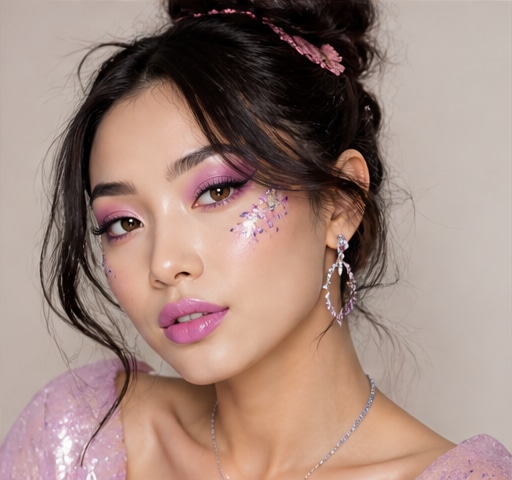
 Try this styleon your selfie · free
How to Do Editorial Makeup at Home
Published September 15, 2026
Editorial makeup is bold, conceptual, and camera-ready, and with the right approach you can absolutely pull it off at home.
What Editorial Makeup Really Means
Editorial makeup is the artistic, statement-making looks you see in magazine spreads and runway shows, makeup designed to express a concept or mood rather than simply flatter for everyday wear. Think graphic liner, bold blocks of color, exaggerated glow, glossy lids, draped blush, or unexpected placements. The defining trait is that it's intentional and high-impact; it photographs dramatically and tells a visual story. Doing it at home isn't about copying a runway look exactly, it's about borrowing the boldness and precision while adapting the wearability. The good news is that editorial makeup is more forgiving of imperfection than it looks, because the whole point is artistry over realism. What it does require is commitment, good lighting, and a willingness to let one feature be the loud star while everything else supports it.
Set Up Your Space and Tools
Editorial work demands that you actually see what you're doing, so lighting is non-negotiable. Sit facing a window for daylight, or set up a ring light or daylight-balanced bulb so colors read true and you can catch every edge. Use a magnifying mirror for precision details. Tool-wise, gather small detail brushes for crisp lines, a flat brush for packing on pigment, fluffy brushes for blending, and cotton swabs plus micellar water for cleanup, your most important editorial tool, since clean edges are everything. Lay everything out before you start so you're not hunting mid-look. Have a setting spray ready, plus tape if you want ultra-sharp geometric edges. Working on a clean, primed, well-moisturized base makes pigment apply evenly and blend smoothly, so don't skip skin prep just because the focus is artistic.
Pick One Bold Focal Point
The cardinal rule of editorial makeup is balance through restraint elsewhere. Choose a single hero feature, a graphic eye, a glossy lid, a bold lip, or dramatic draped blush, and let everything else stay clean and supporting. A common beginner mistake is going maximal on every feature at once, which reads as chaotic rather than artistic. If your eyes are the statement with a sharp color block or floating liner, keep lips neutral and skin fresh. If a vivid lip is the star, pare the eyes back to liner and mascara. This discipline is what makes editorial looks feel deliberate and expensive rather than overdone. Decide your concept first, even one word like glossy, graphic, or glowing, and let that guide every choice so the look hangs together as one idea.
Techniques That Read as Editorial
A few signature techniques instantly elevate a look. Glossy lids, achieved by patting a clear balm or gloss over color, give that wet, high-fashion sheen, though they need touch-ups and reward a special occasion. Graphic liner, sharp geometric lines, floating creases, or negative space, is pure editorial and best built slowly with a fine brush and tape guides. Exaggerated, glassy highlighter pushed to its limit creates dramatic dimension on camera. Draped blush, sweeping a vivid blush from the cheek up to the temple and even the lid, is a classic editorial move that sculpts and adds color in one. Over-lined or blurred lips, bold brows, and unexpected color placement all qualify. Build any of these in thin, buildable layers so you can correct as you go, and clean every edge ruthlessly.
Adapt It So You Can Actually Wear It
Full runway makeup is built for a single photograph under controlled lighting, so adapting it for real life means dialing intensity to suit your day while keeping the artistic spirit. Soften a stark graphic liner into a blurred version, or take a runway's neon color block down to a wearable jewel tone. Pick one editorial element to incorporate rather than the whole face. Because these looks are dramatic and personal, it's smart to test a concept before committing your whole evening to it; you can preview a bold liner, lip, or color story on your own selfie with GlowMaxing to see how the placement and shade flatter your features first. That preview saves you from discovering a color washes you out only after you've fully committed, and helps you choose which idea is worth the effort.
Photograph and Refine Your Look
Editorial makeup is made to be captured, so shooting it is part of the process and a great way to improve. Use natural light or a ring light, and take photos from a few angles, because makeup that looks intense in the mirror often softens dramatically on camera, which tells you whether to build it up more. Look for harsh edges, uneven blending, or color that disappears in photos, then refine. Glossy and metallic finishes especially come alive on camera in ways they don't in person. Keep blotting papers and your detail brushes nearby for touch-ups between shots. Over time you'll learn how much more pigment a look needs to translate through a lens, which is the core skill editorial makeup teaches, and which makes even your everyday makeup more precise and intentional.
The quick checklist
- Light your space with daylight or a ring light so colors read true
- Keep cotton swabs and micellar water close for ruthless edge cleanup
- Choose one bold focal feature and keep everything else clean
- Use tape or fine brushes for sharp graphic and geometric edges
- Build bold color and gloss in thin, buildable, correctable layers
- Try draped blush from cheek to temple for editorial sculpting
- Soften runway intensity into a wearable version for daily life
- Photograph the look from several angles and refine the edges
✦ Free to start✨ Try these looks on your own selfie with GlowMaxing →Upload one selfie and try any hairstyle, color or makeup look instantly with AI. Free to start.Download on theApp Store