
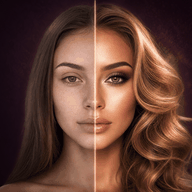
 Try this styleon your selfie · free
How to Match Your Blush and Lip Colors
Published September 13, 2026
Coordinating your blush and lips ties a whole face together; here's how to pair undertones, intensity, and finish like a pro.
Why Matching Matters
Blush and lip color sit at opposite ends of your face, so when they clash, the whole look feels disjointed, like two separate makeup attempts fighting for attention. When they harmonize, your face reads as cohesive and intentional, and the color looks like it belongs to you. Matching doesn't mean identical; it means the two share a relationship, whether that's the same undertone, a complementary pairing, or a tonal echo where one is a softer version of the other. This is one of the fastest ways to make a simple makeup look polished. The classic monochromatic approach, where blush and lips live in the same color family, is foolproof and flattering on everyone, which is why it's the safest starting point before you experiment with more daring combinations.
Start With Undertone
The most reliable matching rule is to keep undertones in the same temperature lane. Warm undertones, peach, coral, terracotta, warm brick, look harmonious together and flatter golden or olive skin. Cool undertones, rosy pink, berry, plum, mauve, pair naturally and suit pink or neutral skin. Trouble starts when you mix a cool blue-pink blush with a warm orange-coral lip; the temperature clash makes both look slightly off. To find your lane, check the colors against your skin in natural light and notice which makes you look brighter versus sallow. Neutral undertones can wear both, which is a lucky flexibility. Once you know your temperature, building matched pairs becomes simple: pick a blush, then choose a lip from the same warm or cool family, and you're most of the way there.
Match Intensity, Not Just Hue
Two colors can share an undertone and still clash if their intensities are mismatched. A bold, saturated red lip overwhelms a barely-there nude blush, and a vivid fuchsia cheek dwarfs a sheer pale lip. The goal is balance: scale both to the same energy level. For a bold lip, you can either match with a stronger blush in the same family or deliberately keep the blush soft so the lip stays the star, but a wishy-washy in-between will look like a mistake. A useful framework is to decide your focal point first. If lips lead, keep blush a quieter version of the same tone; if cheeks lead, soften the lip. When both are equally bold, make sure they're truly the same family so the intensity reads as deliberate drama rather than accidental loudness.
Coordinate Finish and Formula
Finish matters as much as color. A matte lip with a dewy cream blush can look beautifully modern, while a glossy lip pairs naturally with a luminous, slightly glowy cheek. Where people go wrong is matching a heavy powder blush to a juicy gloss; the textures fight. As a rule, cream blush plus balmy or glossy lips reads fresh and cohesive, and powder blush plus matte or satin lips reads classic and put-together. Using the same actual product for both is the ultimate shortcut: many cream blushes double beautifully as lip tints, guaranteeing a perfect match in color and finish. Tinted lip-and-cheek stains are built for exactly this. If you're building a five-minute face, a single multi-use cream stick on both cheeks and lips is the most foolproof matched look you can do.
Easy Foolproof Pairings
If you want shortcuts that always work, memorize a few combinations. Soft rose blush with a rosy nude lip is universally flattering and office-safe. Peach blush with a coral or terracotta lip glows on warm and tan skin. Berry blush with a plum or wine lip suits cool undertones and deeper skin tones beautifully and feels polished for evening. For a fresh, youthful effect, pink-coral blush with a sheer pink-coral gloss is hard to beat. When in doubt, go monochromatic and just vary the intensity. If you'd rather not guess which pairing suits your face, preview different blush-and-lip combinations on your own selfie with GlowMaxing to see them together before you buy anything. Seeing both colors on your actual face removes all the guesswork.
When to Break the Rules
Once you understand the logic, you can bend it on purpose. A deliberate contrast, like a cool berry lip with a warm peach blush, can look editorial and fresh if the intensities are balanced and you commit fully; the key is that it must read as a choice, not an accident. Bold runway looks often pair unexpected cheek and lip tones, but they're styled so the rest of the face stays clean to let the color do the talking. If you're experimenting, keep eyes neutral so the cheek-lip combination is the clear focus. The safest place to break rules is with sheer, blendable formulas that you can layer and adjust, rather than opaque ones that lock you in. Test bold pairings in daylight first, and trust your eye: if it looks intentional and balanced, it works.
The quick checklist
- Keep blush and lip undertones in the same warm or cool temperature
- Match intensity: pair a bold lip with a stronger or deliberately soft cheek
- Coordinate finish, cream blush with glossy lips, powder with matte
- Use a single cream stick on cheeks and lips for a guaranteed match
- Try rose blush with rosy nude lips for a universally flattering combo
- Pair peach cheeks with coral lips on warm and tan skin
- Go monochromatic and vary intensity when in doubt
- Keep eyes neutral when you deliberately contrast cheek and lip tones
✦ Free to start✨ Try these looks on your own selfie with GlowMaxing →Upload one selfie and try any hairstyle, color or makeup look instantly with AI. Free to start.Download on theApp Store