
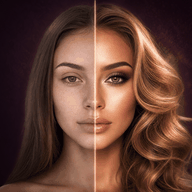
 Try this styleon your selfie · free
Rose Gold Hair: Who It Suits and How to Achieve It
Published September 18, 2026
The dreamy pink-copper blend that flatters more skin tones than you'd think — here's exactly how to get it and keep it from fading to brass.
What Rose Gold Hair Actually Is
Rose gold isn't one color — it's a controlled blend of soft pink and warm copper, usually landing somewhere between a pale champagne rose and a deeper rosy bronze. The metallic name is earned: the best versions have a faint shimmer that shifts in different light, reading more pink indoors and more copper in sunlight. Colorists build it by depositing a pink-violet or pink-copper toner over a pre-lightened base, then dialing the warmth up or down depending on how bold you want it. Pastel rose gold needs the lightest base (think level 9-10), while a richer rose-bronze can sit happily on level 7-8 hair. The shade has stayed popular for years precisely because it walks the line between fun and wearable — bold enough to notice, soft enough for an office.
Who It Flatters Most
Rose gold is unusually forgiving because pink and peach undertones echo the warmth in most skin. If you have fair skin with pink or neutral undertones, a pale, cool-leaning rose gold makes you look lit-from-within. Olive and tan complexions look stunning in deeper rose-copper, which picks up golden warmth in the skin. Deeper skin tones can absolutely wear it too — the key is a richer, more saturated copper-rose rather than a wishy-washy pastel, which can look chalky against any complexion. Eye color matters less than contrast: rose gold tends to brighten green and hazel eyes especially. The one group that should tread carefully is anyone with very ruddy or rosacea-prone skin, since a heavy pink tone can amplify redness — a copper-dominant blend balances that better.
Getting There: The Lightening Step
Almost no one achieves true rose gold without lightening first. If you're naturally dark, this can mean two or more bleaching sessions spaced a week or more apart to protect the hair's integrity — pushing it all in one day is how you get breakage. Your target before toning is a clean, even pale yellow (level 9). Any leftover orange will muddy the pink into a brassy salmon. If you're already a natural or box blonde, you may only need a single, gentle lift or none at all. This is genuinely the step where a professional earns their fee: even lightening across the lengths and ends is what makes the final tone look expensive rather than patchy. Always do a strand test if you're going the at-home route.
Toning and Dialing In the Shade
Once you've got a pale base, the rose gold itself comes from a toner or semi-permanent gloss — typically a mix of pink and gold or pink and copper pigments. The ratio is everything: more pink reads romantic and cool, more gold reads warm and sunset-like. Apply to damp, towel-dried hair for even saturation, process for the recommended time (usually 10-20 minutes), and rinse with cool water to lock in shine. Because these are deposit-only colors, you can't over-process into damage, but you can over-saturate into a tone that's too intense, so check it early. Want to see how a pale rose versus a deep rose-bronze reads against your own face before you commit? Snap a selfie and preview both with GlowMaxing — it's the fastest way to avoid a shade you'll regret.
Making It Last
Rose gold is a fugitive color — the pink molecules are small and wash out fast, often within 4-6 weeks. To stretch it, wash less frequently (every third day if you can), always in cool water, since heat opens the cuticle and lets pigment escape. A pink- or rose-tinted conditioning mask used once a week re-deposits color and keeps the tone from sliding into plain blonde. Heat styling accelerates fading, so use a heat protectant and keep tools below 350°F. Chlorine and hard water are enemies too — a clarifying rinse before swimming and a shower filter both help. Expect to refresh the gloss every 4-8 weeks. Budget for that upkeep before you commit; rose gold is a relationship, not a one-night stand.
Low-Commitment Ways to Try It
Not ready to bleach your whole head? You have options. Rose gold looks gorgeous as a balayage or money-piece — concentrated around the face and on the ends where lightening is easier and grow-out is graceful. Temporary rose gold hair makeup and wash-out sprays let you test the vibe for a single night with zero damage, though they show best on already-light hair. Clip-in extensions in rose gold give you the full effect on demand and come off at the door. If your hair is already blonde, a take-home gloss kit is the lowest-stakes real version: it fades out cleanly in a few weeks if you decide it's not you. Start small, live with it, then go all-in if you fall in love.
The quick checklist
- Lighten to a clean pale yellow (level 9) before toning, or the pink turns brassy
- Choose a copper-dominant blend if you're ruddy or have deeper skin; pastel for fair, cool undertones
- Wash in cool water every 2-3 days to slow the fast-fading pink
- Use a rose-tinted conditioning mask weekly to re-deposit color
- Keep heat tools under 350°F and always use a protectant
- Try a face-framing money-piece first if you're nervous about an all-over color
- Refresh the gloss every 4-8 weeks to keep it from sliding to plain blonde
✦ Free to start✨ Try these looks on your own selfie with GlowMaxing →Upload one selfie and try any hairstyle, color or makeup look instantly with AI. Free to start.Download on theApp Store